Welcome Duke University medical students to Medical Neuroscience

Welcome to our on-campus students in the Duke University School of Medicine

On 3 January 2017, the first medical students at the Duke University School of Medicine (Durham, North Carolina USA)will start a four-week course that covers cellular neurobiology, systems neurophysiology, clinical neuroanatomy, and cognitive neuroscience.
brain and behavior
“Brain and Behavior”, by Kevin Parks

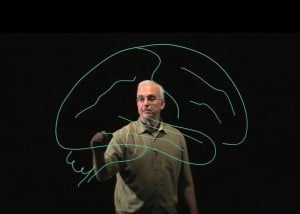
The name of the course is “Brain and Behavior” and is part of the required preclinical science curriculum for medical students at Duke. Professor White is the instructor in this course. They will work through all of Medical Neuroscience, with some additional content on cognition and biological psychiatry, before their final exam on January 30th.

We (the Medical Neuroscience Learning Community) would like to welcome those students to the Course Medical Neuroscience and to the supportive website Learn Medical Neuroscience. Moreover, we hope to meet the on-campus students on the Medical Neuroscience discussion forums with questions and reactions to posts of other students. Especially we would like to see their images of their learning experience and the images they produce of neurobiological structures posted with #GetNeuro on Instagram appear on the image carousel on the page Learning Community.

Blended learning

Continue reading “Welcome Duke University medical students to Medical Neuroscience”
Social Brains: using social media to learn Medical Neuroscience

Prof. Leonard White Presents on “Social Brains” at Duke Teaching Showcase

By Courtney Lockemer, Communications Manager for Online Duke

On October 11, Dr. Leonard White presented on the Medical Neuroscience MOOC at the Duke University Center for Instructional Technology 2016 Showcase. The event, which is known on Duke’s campus as the CIT Showcase, is a free one-day conference run by the university’s teaching and learning center that celebrates creativity and innovation in teaching. Over 200 faculty and staff from Duke and nearby higher education institutions attended the conference.

Social Brains in Medical Neuroscience

Continue reading “Social Brains: using social media to learn Medical Neuroscience”

MOOCs for Medical Education

Medical Neuroscience, a MOOC for Medical Education

By Ellen Vos-Wisse and Courtney Lockemer, Communications Manager for Online Duke

Story of a MOOC

Previously on this website an article was published: The Story behind “The Story of a MOOC” . Courtney told us about the process of the creation of this free Medical Education online, the course Medical Neuroscience. She also presented an infographic about the creation of the course.

Since then the situation has evolved. The course Medical Neuroscience does not only run once a year anymore but multiple times a year, learners can start every month. And this MOOC has found a valuable place in Medical Education around the world.

New Infographic

Continue reading “MOOCs for Medical Education”

Community Mentors for MOOCs

by Claire Smith – Community Manager Community Team at Coursera

Mentors and the learning community

One of the most obvious differences between the in-person and online learning experiences is the communication between learners. Social interaction is an important aspect of learning. Therefore online courses have replaced the classroom with forums, as a way of providing that much needed social element.

Another challenge of MOOCs is that the instructor simply cannot provide support to thousands of learners all at once. This, again, is a place where forums can really help.

coursera

At Coursera we found that simply providing a space for learners to interact and help one another was not always enough. There often needs to be a spark that seeds the discussion.  Also, some reassurance that someone is there to respond is welcome. Forums need  moderation to make sure the forums remain a safe and welcoming space for all.

Therefore we reached out to our community, to our learners who were already the most engaged, and those who had done really well in their courses. We  invited them to volunteer as Mentors. We were, and continue to be, overwhelmed by the positive, enthusiastic response and the supportive community which formed as a result. We’re thrilled to be able to continue expanding the program to support more and more courses! Continue reading “Community Mentors for MOOCs”

Hangout nr. 2 Medical Neuroscience, August 20th 2016

Hangout nr. 2, Medical Neuroscience on-demand

Google Hangout nr.2. For all sessions (3 running at the time)  on the new Coursera platform. The Hangout was on August, at 2 pm Eastern Time. Below you find a link to the video of the Hangout on YouTube and a short overview of the subjects addressed with the time slot that part of the discussion starts


by Ellen Vos-Wisse course Mentor


Addiction relative to foods

Continue reading “Hangout nr. 2 Medical Neuroscience, August 20th 2016”

Medical Neuroscience in Class Central’s Top 50 MOOCs of all time

Class Central’s Top 50 MOOCs of All Time

There are close to 6,000 MOOCs from 600+ universities around the world. Class Central is a website with an overview of MOOCs and reviews by learners that have taken courses. Learners can reviews and make an informed decision weather a course suits them.

Class Central has made  a list of Top 50 MOOCs of All Time to help potential learners for an online course . Thousands of reviews written by Class Central users form the foundation of that ranking.

Medical Neuroscience ranks in the top 13 science courses!

visualize, Medical Neuroscience, prof. L.E. White, Learn Medical Neuroscience
“Visualize your knowledge”- prof. Len White

Continue reading “Medical Neuroscience in Class Central’s Top 50 MOOCs of all time”

Teaching Award for Prof. Len White

Teaching Award
Teaching Award for Prof. Len White

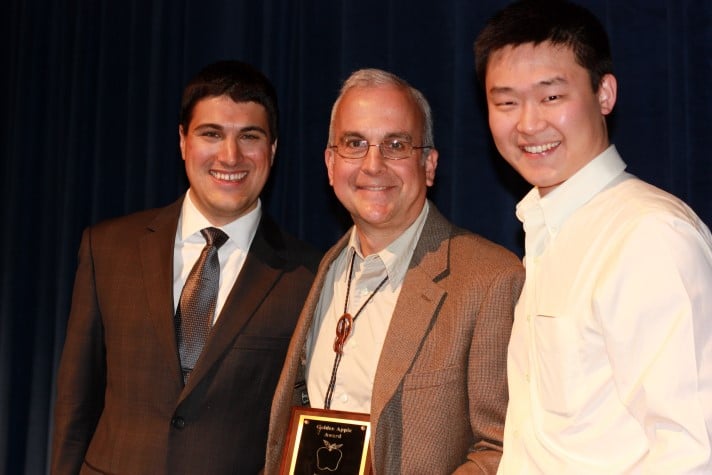
On March 12, 2016 the 2016 Prof. White received the Preclinical Golden Apple award. Prof. White is Associate Professor in the Doctor of Physical Therapy Division at Duke University. Prof. White is also the teacher of the MOOC Medical Neuroscience.

The Preclinical Golden Apple award for the recognition and appreciation of outstanding dedication to medical student education. The Golden Apple is the most prestigious teaching award given by the medical school student body. Three awards are given each year: one each to a preclinical faculty member, a clinical faculty member, and a house staff member.

Selection

Continue reading “Teaching Award for Prof. Len White”

Learning Community Medical Neuroscience takes shape

The Learning Community of the on-demand course is taking shape.

Statistics

Learning Community statistics from July 4th 2016 (session June 6th – September 12th) are:

  • 21,108 total visitors
  • 9,857 enrolled learners
  • 5,175 active learners
  • 1,679 active learners in week 26 (last week)
  • 71 individuals rated the course with an average rating of 4.9 of 5.0
  • 2 individuals have already completed the course
  • 74% of learners are outside of U.S. (India = 6.7%, Mexico = 4.3%, Brazil = 4.1%, UK = 3.8%, Canada = 3.4%, China = 3.0%, and further down the list is the Netherlands at 1.2%)
  • 49% female
  • Age bin mode = 25-34 years old
  • 30% are full time students; 58% are not
  • 20% are PhDs or professional school graduates; 26% do not have a college degree
  • 39% are employed full time
medical neuroscience study strategy
MediNeuro by Kevin Reginald Parker
Performance

Continue reading “Learning Community Medical Neuroscience takes shape”

Neuroscience: Perception, Action and the Brain Specialization

Specialization Neuroscience: Perception, Action and the Brain

neuroscience: perception, action and the brain
Neuroscience: Perception, Action and the Brain

Duke University has designed this specialization for advanced baccalaureate and prospective or current graduate students who are pursuing degrees in the brain sciences. Duke University has had one run of the Capstone project of this specialization on Coursera’s session based platform.

Specialization program

Continue reading “Neuroscience: Perception, Action and the Brain Specialization”

The Story Behind “The Story of a MOOC”

By Courtney Lockemer, Communications Manager for Online Duke

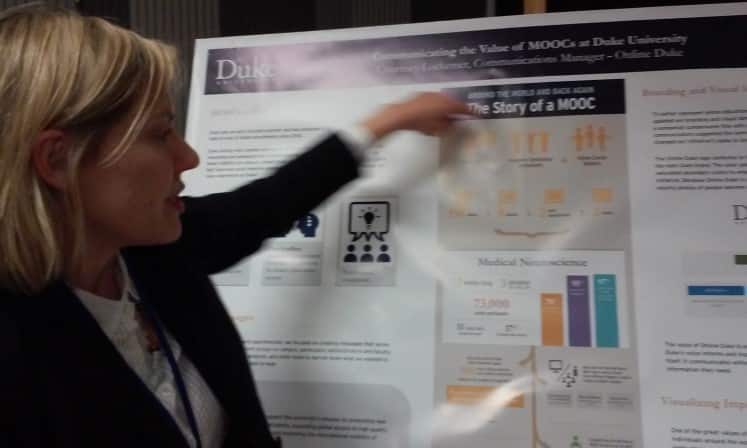
courtney lockemer presenting a poster on medical neuroscience
Courtney Lockemer presenting the poster “The Story of a MOOC”

What does it take to make a MOOC?

What does it take to make a MOOC? Duke’s Center for Instructional Technology created a infographic that tells the story of one MOOC, Medical Neuroscience, taught by Duke professor Leonard White. The infographic illustrates just how much effort goes into one online course (196 videos, for example) and the many far-reaching impacts that come out of it.

Duke University was an early Coursera partner and has produced 31 MOOCs (and counting) for a total of over 2 million enrollments since 2013. Duke faculty who created and taught MOOCs often found the experiences personally rewarding and pedagogically transformative.

Value of MOOC’s at Duke

Continue reading “The Story Behind “The Story of a MOOC””